
December 6, 2025

Surfing in São Tomé remains quiet and unhurried. Two recognised surf school zones sit on the east coast, backed by rainforest and volcanic headlands, and long-period swell from the south shapes clean, moderate waves during the dry season. This guide offers a clear and realistic overview of the island’s surf rhythm, the main breaks, and how to prepare for a coastline where exploration matters more than crowds. I’m no
| Key Information | Details |
|---|---|
| Main Season | Dry season from April to October, with the most reliable waves between June and September. |
| Swell Source | Long-period south and south-west swell reaching the east coast. |
| Water Temperature | Warm all year. No wetsuit required, light rash vest useful for sun and reef. |
| Main Surf Areas | Sete Ondas, Santana area, Radiation Point, northern reefs and selected southern beaches. |
| Wave Character | Moderate power, tide sensitive, mix of beach breaks and volcanic reef points. |
| Recommended Level | From confident beginners with lessons to relaxed intermediate and advanced surfers. |
| Boards and Gear | Bring your own boards, spare fins and leashes, wax and a basic repair kit. |
| Crowd Level | Very low. Sessions are usually quiet, with small local crews at the main spots. |
| Hazards | Volcanic reef and rock, urchins at some points, strong sun. Enter and exit slowly. |
| Transport | Private vehicle needed to reach most breaks. Public transport does not carry boards. |
| Trip Style | Slow, exploratory surf travel rather than tightly scheduled high-performance sessions. |

São Tomé surfing is defined by warm water, quiet beaches and a coastline shaped by old volcanic rock. Two recognised surf school zones lie along the east coast, where long-period south swell bends into sheltered bays and points. Surfing in São Tomé is not fast or crowded. It feels unhurried, shaped by the rhythm of the tide and the gentle pace of the island itself. Most days offer clean, moderate waves that suit confident beginners, intermediates and anyone who prefers long, steady rides over intense, high-performance conditions.
Because equipment is limited on the island, most visitors arrive with the boards and spares they rely on. Surfing in São Tomé is about being self-sufficient, exploring the coastline at your own pace and enjoying the kind of sessions that unfold without noise or pressure. It is one of the few places in the region where you can still paddle out and find yourself alone with the tide and the swell.

| Key Information | Details |
|---|---|
| Day Focus | Central Highlands: Coffee and Waterfall |
| Accommodation | São Tomé City (Same as Day 1) |
| Key Sites | Roça Monte Café, Cascata São Nicolau |
| Vehicle Note | 4x4 highly recommended for tracks inland |
| Local Insight | Steps at waterfall are damp/slippery; drive slowly. |
The dry season from April to October is when São Tomé surfing becomes most reliable. Between June and September, long-period swell from the south and south west reaches the east coast with enough strength to shape clean, usable walls. This is the heart of surfing in São Tomé, when the ocean becomes more consistent and the island’s relaxed surf rhythm is at its best. Water temperatures remain warm throughout the year, so you can stay in the water for long stretches without worrying about neoprene.
Equipment is limited on the island, so surfers travel with everything they plan to use. Spare fins, leashes and repair kits are essential. Surfing in São Tomé during this season suits people who appreciate steady lines, gentle crowds and a coastline where the pace is set by the tide rather than by other surfers.
| Key Information | Details |
|---|---|
| Day Focus | Northern Coastal Loop & Roças |
| Accommodation | São Tomé City (Final Night) |
| Key Sites | Roça Agostinho Neto, Lagoa Azul |
| Activity | Architecture, Swimming, Snorkelling |
| Local Insight | Diogo Vaz outlet is a reliable chocolate stop. |
Conditions for São Tomé surfing are shaped by the island’s volcanic coastline and long-period swell patterns. Waves tend to break with moderate power, offering clean faces and forgiving entries rather than heavy, thumping sections. Surfing in São Tomé often revolves around the tide. Low tide can expose shallow reef, while very full tides can soften the shape of the wave. Mid tide usually offers the most balanced conditions for both beach breaks and reef points.
The shoreline is a mix of sand, rock and reef, so moving slowly when entering or exiting the water is important. Reef boots help at more exposed spots. A small first aid kit is sensible because replacement gear and surf-specific supplies are difficult to find. For most visitors, surfing in São Tomé feels calm and steady, with empty stretches of coastline and long, relaxed sessions that suit a slow style of travel.
The shoreline is a mix of sand, reef and rock, so entries and exits should be taken slowly, especially at unfamiliar spots. Reef boots can be useful if you plan to explore beyond the softer beach breaks. A small first aid kit is also sensible for treating minor cuts, as replacement gear and surf-related supplies are limited on the island. Overall, the conditions suit surfers who enjoy clean lines, steady walls and sessions that unfold at a calm pace.
The east coast is the centre of São Tomé surfing, with a mix of beach breaks and volcanic reef points shaped by incoming south swell. Surfing in São Tomé is most accessible here, especially for visitors who want guidance or easy entry points. Further north and south, the coastline becomes more exploratory, offering long headlands, natural shelves and occasional reef setups that work when swell direction and tide align.
I am not a surfer, so this guide does not come from personal experience. It is based on local research, conversations with visiting surfers and people I know who surf these breaks regularly.
Sete Ondas is one of the most approachable areas for surfing in São Tomé. It is a sand-bottom beach break with several peaks, a forgiving entry and reliable swell reception. It is one of the island’s two recognised surf school zones and a natural place for visitors to settle into the local conditions.
The Santana area is the second surf school base on the island. The wave shifts with tide and swell angle, but the setting is sociable and relaxed. It is a dependable area for São Tomé surfing, welcoming both beginners and more experienced surfers who want something simple and enjoyable. If you wish to surf near Club Santana, remember they control access to the beach and there’s a charge for access.
Radiation Point is a right-hand point shaped by volcanic rock. When a solid south swell arrives, surfing in São Tomé often finds its most iconic form here, with long, steady rides and open walls. It suits surfers with some experience and rewards patient positioning and timing.
Point Zero Left Point Zero Left sits off the southern tip of São Tomé, near Ilhéu das Rolas and the Porto Alegre area. It is a left-hand reef or point that works when solid south swell wraps into the channel. The wave is far less consistent than the east coast breaks, but on the right day it offers long, memorable rides in a setting that feels completely remote.
The southern coast is the exploratory heart of São Tomé surfing. The coastline south of Santana feels wilder and more remote, with breaks that appear along beaches and reef points. Conditions shift quickly with tide and wind, and even on quiet days the drive south is worth it for the scenery alone.
| Key Information | Details |
|---|---|
| Day Focus | Second Full Day: Water Activities & Flexibility |
| Accommodation | Príncipe Island (Same Lodge/Guesthouse/Bom Bom) |
| Activity Type | Boat trips, Beach visits, Guided walks. |
| Fishing Note | Low-impact; See Fishing Guide. |
| Local Insight | Activities are highly weather/sea state dependent. |
The natural environment plays a central role in São Tomé surfing. The island’s volcanic origin has created a coastline of lava shelves, mixed reef and narrow sandy bays, which shape the way swell bends and breaks along the shore. Surfing in São Tomé often involves reading the water carefully before paddling out. Each spot behaves differently with the tide, and small changes in swell direction can transform a quiet headland into a usable point.
Because the shoreline includes reef and rock, entering and exiting slowly is essential. Low tide can expose shallow sections, while fuller tides soften the wave. Reef boots help at more exposed spots, and a small first aid kit is sensible given the limited access to surf-specific gear. Many people who come for São Tomé surfing value the combination of clean waves and the island’s quiet natural setting, where rainforest meets the sea and the coastline feels far removed from crowded surf destinations.
| Key Information | Details |
|---|---|
| Day Focus | Central Highlands Rainforest Hike |
| Accommodation | Southern São Tomé (Same as Day 7) |
| Key Sites | Lagoa Amélia, Bom Sucesso Botanical Garden |
| Activity Note | Requires **local guide** and sturdy footwear. |
| Hike Difficulty | Moderate (can be very muddy/slippery). |
Surfing in São Tomé relies on having your own transport, check out our car-rental service here.. The main breaks are spread out along the east coast, and public options cannot carry boards. Most visitors hire a vehicle so they can move between spots and check conditions at their own pace. Roads can be slow in places, especially outside the capital, so it is worth allowing extra time when travelling between beaches, reef points and lookouts.
Bringing all the equipment you expect to use is essential. Boards, fins, leashes, wax and repair kits are difficult to replace on the island, and there are no full surf shops. Surfboards travel as sports equipment on international flights, though size limits and fees vary by airline. Smaller inter island flights may restrict board length, so it helps to plan this in advance.
A relaxed schedule works best here. There is no tight surf circuit or fixed route. Most surfers follow the coastline, check the tide, and decide where to paddle out based on what the morning brings.
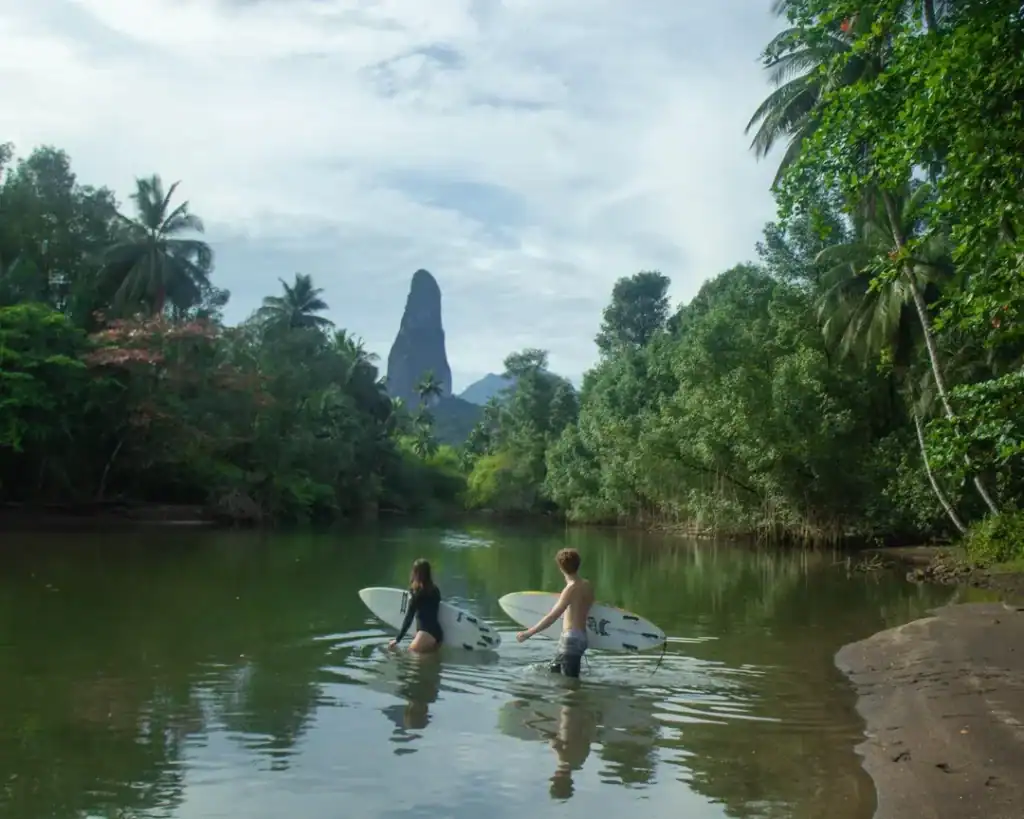
The natural environment plays a central role in São Tomé surfing. The island’s volcanic origin has created a coastline of lava shelves, mixed reef and narrow sandy bays, which shape the way swell bends and breaks along the shore. Surfing in São Tomé often involves reading the water carefully before paddling out. Each spot behaves differently with the tide, and small changes in swell direction can transform a quiet headland into a usable point.
Because the shoreline includes reef and rock, entering and exiting slowly is essential. Low tide can expose shallow sections, while fuller tides soften the wave. Reef boots help at more exposed spots, and a small first aid kit is sensible given the limited access to surf-specific gear. Many people who come for São Tomé surfing value the combination of clean waves and the island’s quiet natural setting, where rainforest meets the sea and the coastline feels far removed from crowded surf destinations.
The local culture around surfing in São Tomé is small, warm and genuine. Wave riding existed here long before modern fibreglass boards, and that heritage still shapes the atmosphere along the coast. Sessions tend to be relaxed, with people sharing waves and treating the water as a social space rather than a competitive one. For many travellers, the openness of the community becomes one of the defining qualities of São Tomé surfing.
Because equipment is scarce, spare fins, leashes or wax are genuinely valued. Visitors who arrive prepared often leave something behind for local surfers, reinforcing the sense of care and connection that characterises surfing in São Tomé.
São Tomé surfing offers warm water, quiet beaches and sessions that unfold at a steady pace. There are no crowds, no rush and no pressure to chase perfect conditions. Surfing in São Tomé suits travellers who appreciate clean lines, gentle waves and the freedom to explore a coastline shaped by tide, swell and volcanic stone. If you want a surf destination where calm and space are part of the experience, this island provides exactly that. For more information take a look at the offical São Tomé and Principe tourist board site here.
Is São Tomé surfing suitable for beginners?
Do I need a wetsuit for surfing in São Tomé?
What board should I bring for São Tomé surfing?
Is São Tomé surfing crowded?
Is it safe to surf in São Tomé?
Need Advice?